Growing Native: CKBY’s Partnership with Wild Ones Greater Lynchburg Area
Camp Kum‑Ba‑Yah Nature Center is proud to highlight our growing partnership with Wild Ones of the Greater Lynchburg Area, a volunteer‑driven organization committed to restoring native landscapes and helping our community reconnect with the plants that sustain pollinators, wildlife, and healthy ecosystems. This collaboration has brought an exciting new resource to Lynchburg: a full suite of native plant pollinator‑garden templates designed specifically for our region. These free, easy‑to‑follow designs give residents a clear starting point for creating habitat at home, whether they’re working with full sun, part shade, or woodland conditions.
Each template includes a thoughtful plant list, spacing guide, and site‑preparation steps, all centered on species that are locally native to the Lynchburg area. The templates emphasize how native plants support bees throughout their life cycles, offering nectar, pollen, shelter, and overwintering habitat. For example, the Woodland Moist Soil design features Golden Ragwort, described as “a colony forming plant that has many yellow flowers that are used by Cuckoo Bees, Halictid Bees, and more,” and Common Blue Violet, which “attract spring flying bees, including a specialist, Violet Andrenid Bee” (from the uploaded templates). In the Full Sun & Part Shade Medium Soil design, visitors will find Slender Mountain Mint, which “attracts large amounts of pollinators, including many bees,” and Common Milkweed, whose fragrant blooms “hum with bee life during its June–August bloomtime.” These templates were created so that anyone—from first‑time gardeners to seasoned native‑plant enthusiasts—can confidently build habitat that is both beautiful and ecologically meaningful.
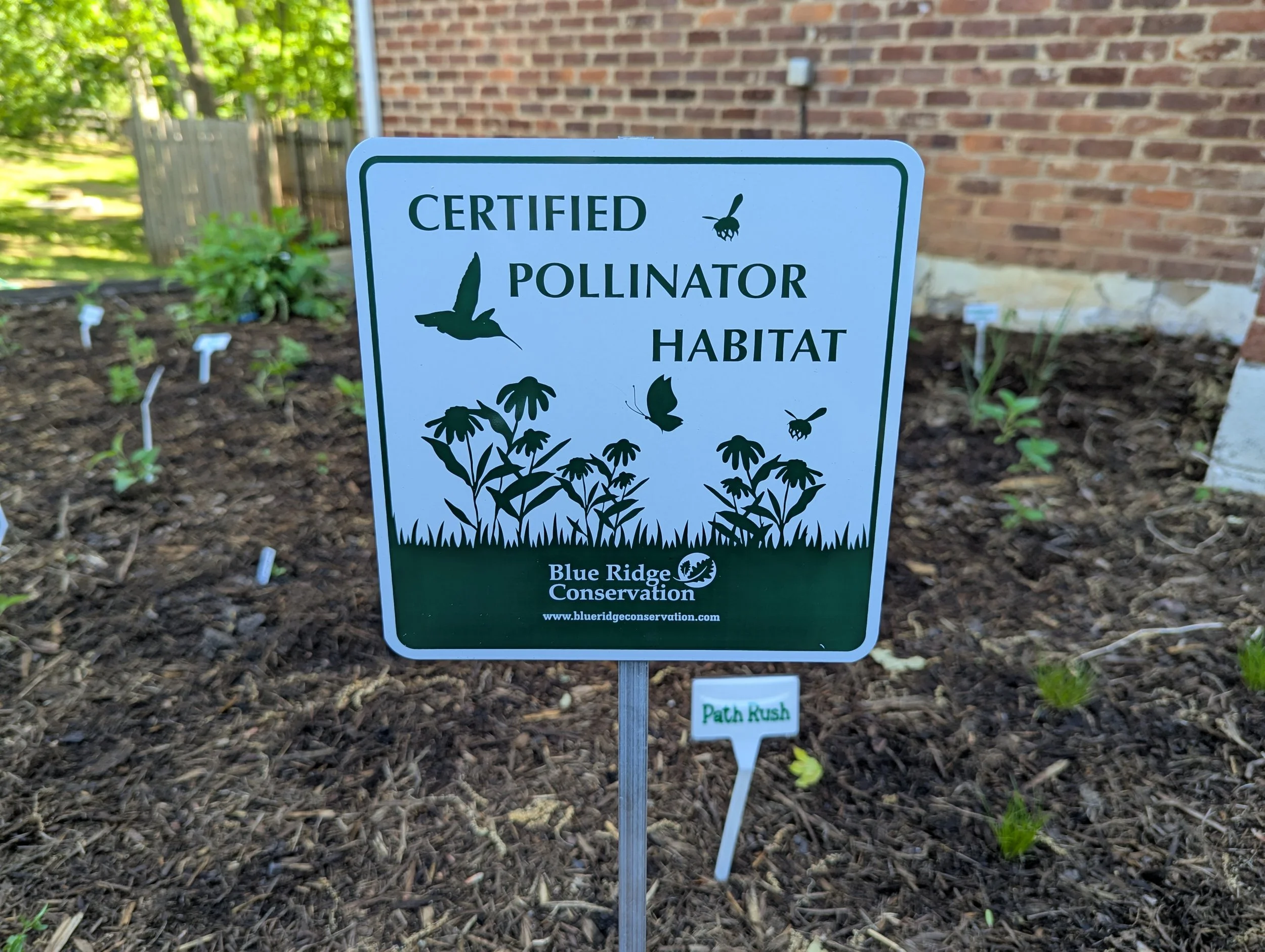
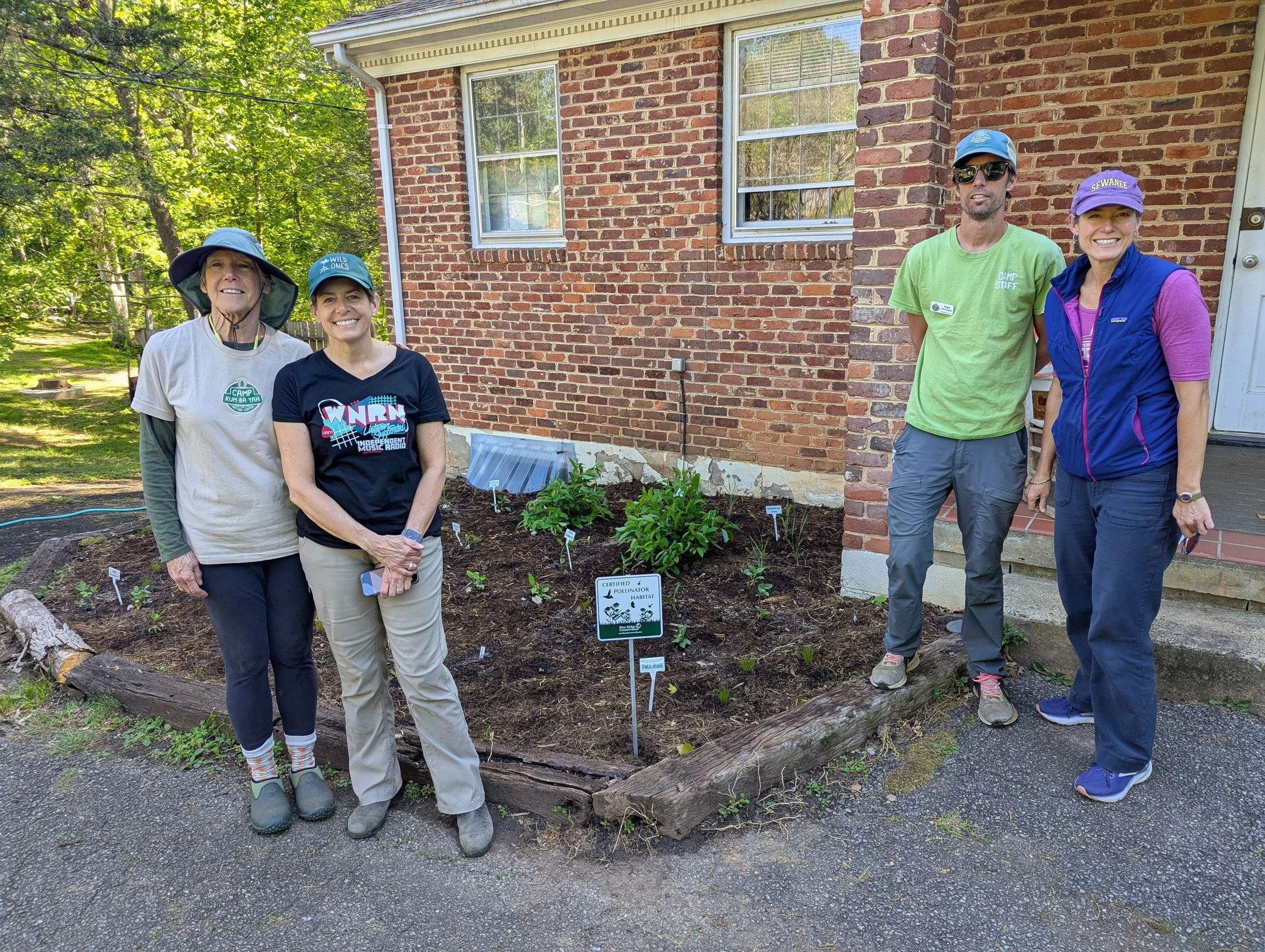
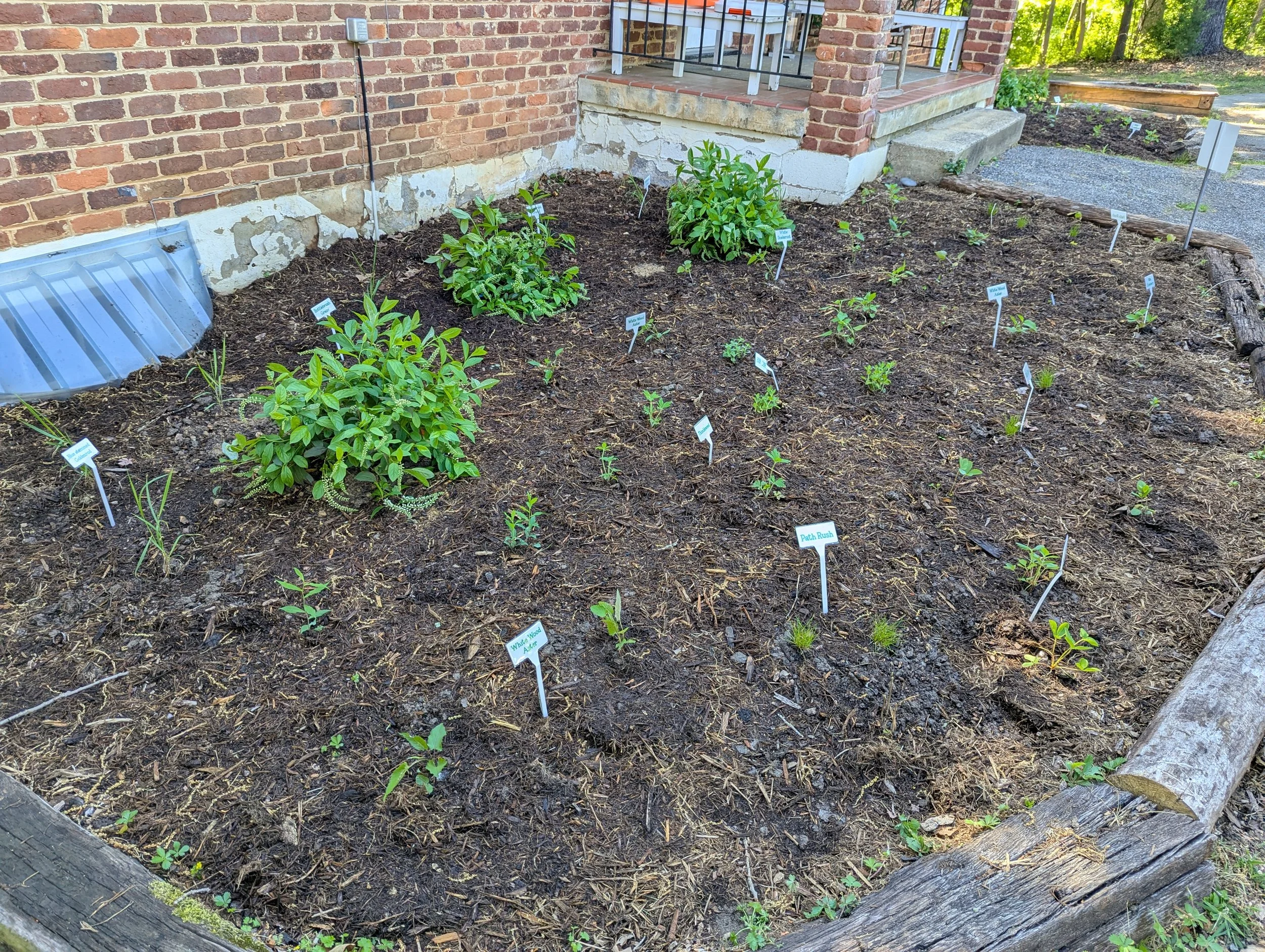
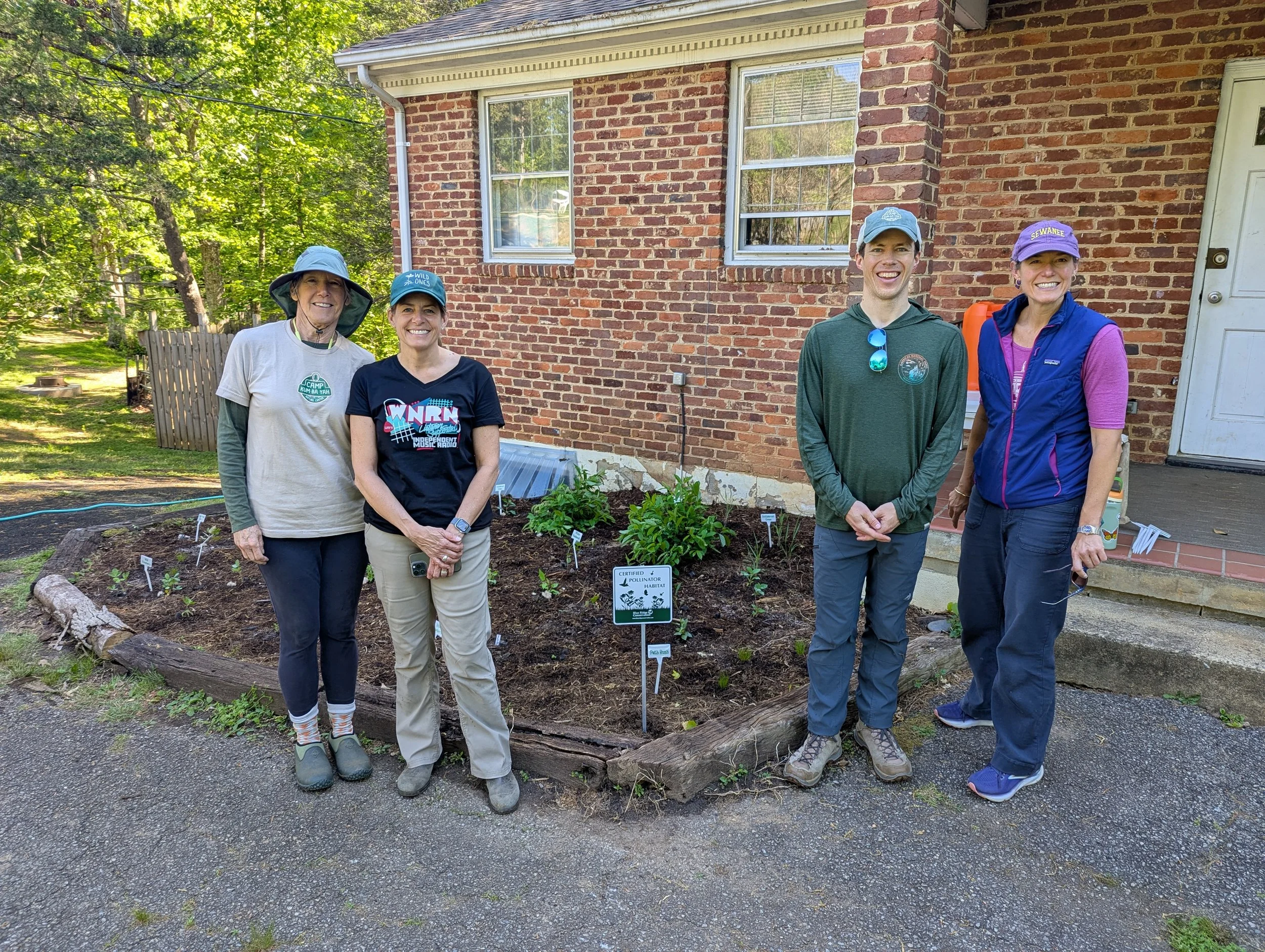
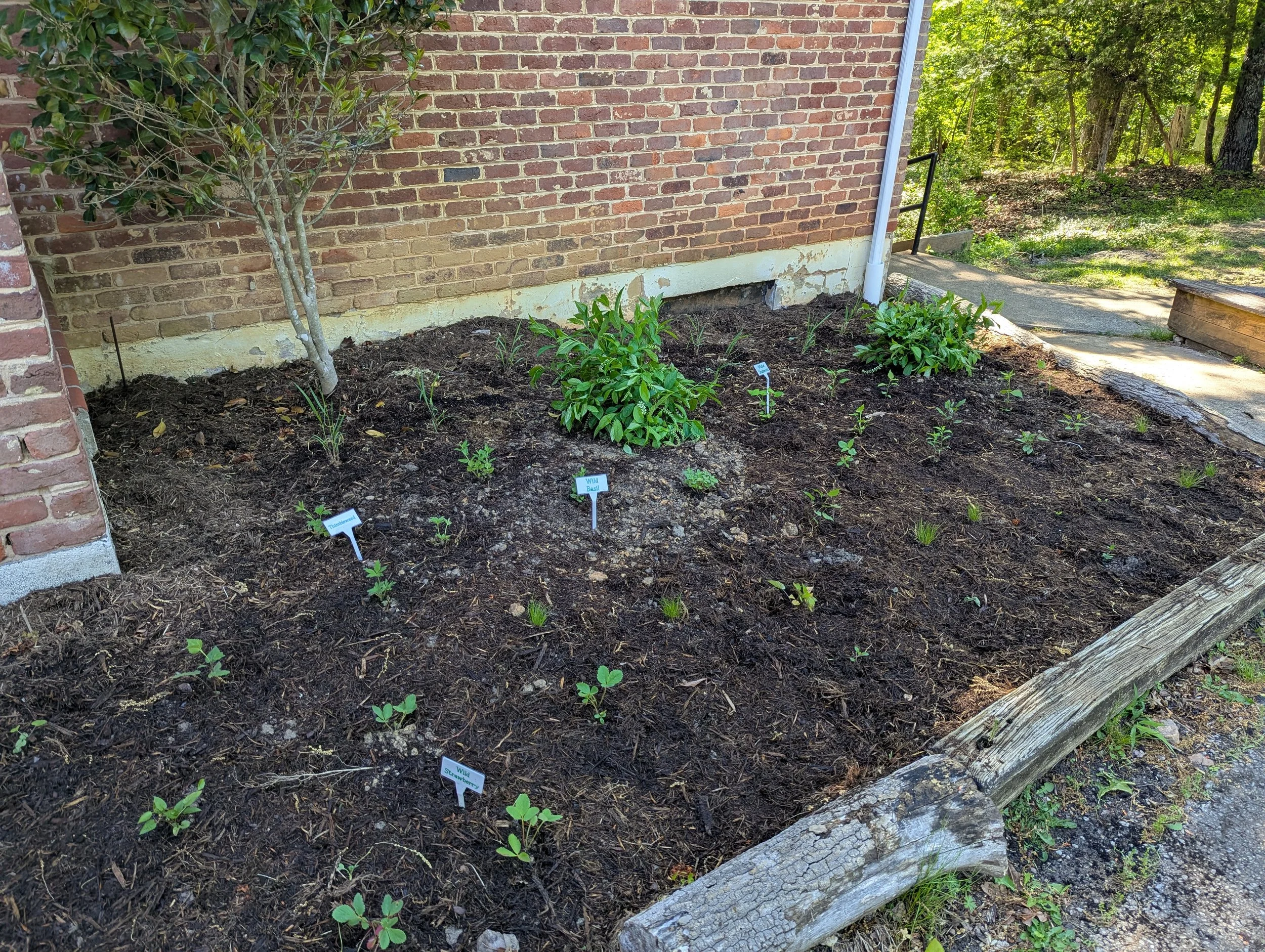
To help residents visualize what these gardens look like in practice, Wild Ones has installed demonstration plantings at several prominent locations around Lynchburg, including right here at Camp Kum‑Ba‑Yah. At CKBY, they established both full‑sun and shaded woodland gardens, showcasing how native species thrive in different conditions and how a diverse planting can provide nectar from early spring through late fall. These gardens demonstrate the value of structural variety, from low groundcovers to tall grasses and flowering perennials, and highlight species that support specialist bees, cavity‑nesting bees, and overwintering insects. For the many families, school groups, and community members who visit camp, these plantings serve as living classrooms—places where people can see how native plants transform even small spaces into vibrant habitat.
The Wild Ones Greater Lynchburg Area Chapter offers a wealth of resources for anyone interested in learning more. Their website features downloadable garden designs, educational events, reading lists, and opportunities to join a community of people dedicated to ecological gardening. Their mission is rooted in helping people understand the importance of native plants and giving them the tools to make meaningful changes in their own yards and neighborhoods. You can explore their work and access their resources at greaterlynchburgarea.wildones.org.
We are deeply grateful for Wild Ones’ partnership at Camp Kum‑Ba‑Yah and for the expertise and generosity they bring to our community. Their work strengthens our mission to connect children and families with the natural world and to steward our 47‑acre urban forest with care and intention. As we move into the growing season, we wish all our readers a fruitful, inspiring year in the garden—may your spaces buzz with life, color, and the joy of supporting the wild things that make our world whole.