Remembering Dr. Martin Luther King Jr.’s 1962 Visit to Lynchburg and Camp Kum-Ba-Yah
Remembering Martin Luther King Jr.’s 1962 visit to Lynchburg and visit to Camp Kum-Ba-Yah.
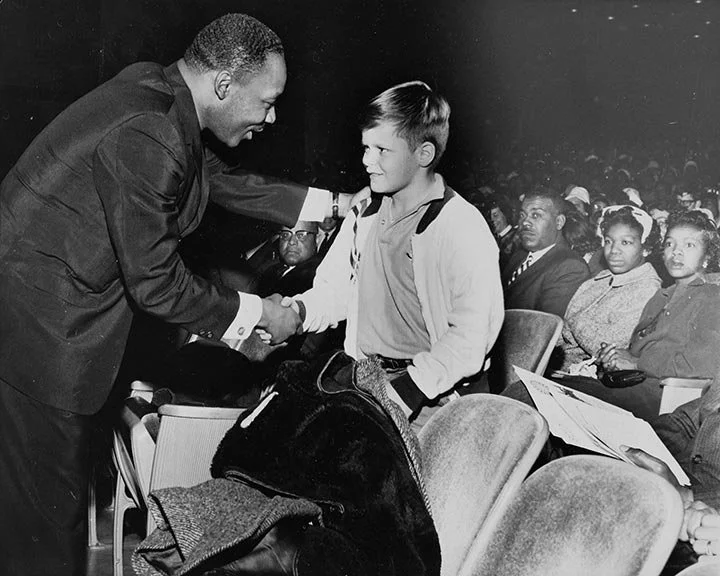
On March 27, 1962, Dr. King visited Lynchburg as part of his People‑to‑People Tour across southern Virginia. The visit was focused on voter registration, nonviolence, and encouraging young people and community members to continue the long work of justice and equality. The day culminated with a public address at E.C. Glass High School, following a series of other gatherings and visits across Lynchburg.
Camp Kum-Ba-Yah Nature Center occupies a unique place in Lynchburg’s Civil Rights history, having played host to a portion of Martin Luther King, Jr’s 1962 visit as well as other significant events in the year leading up to it. Themes of welcome, inclusion, and appreciation for diversity span CKBY’s founding, history, and ongoing mission today.
Lynchburg and the Road to 1962
Dr. King’s visit to Lynchburg in 1962 occurred during a period of growing local engagement with the national Civil Rights Movement. In December 1960, six college students, later known as the Patterson Six, staged a peaceful sit‑in at the segregated lunch counter inside Patterson’s Drug Store. Their refusal to leave, and the arrests that followed, marked one of the city’s earliest and most visible challenges to segregation in public accommodations. The sit‑in drew attention to the everyday realities of racial exclusion in Lynchburg and underscored the role that students, faith leaders, and community members were beginning to play in advancing nonviolent protest.
Only a few months later on July 4th, 1961, as the City of Lynchburg chose to close its public swimming pools rather than integrate them, Rev. Bev Cosby, a founder of Camp Kum-Ba-Yah, chose to welcome members of the African-American community to use the camp pools. Most white families who were swimming at the camp pools that day got out, refusing to swim with neighbors of color. Those families who remained to share the pools faced harassment, threats, and vandalism in the months that followed. Additionally, all but 9 campers were withdrawn from summer activities at the camp in protest.
Integrating the camp pools was not Cosby’s first effort towards creating inclusive and desegregated spaces in Lynchburg. At the time, Camp Kum-Ba-Yah was interwoven with Cosby’s church congregation: The Church of the Covenant, which remains on the same property as the camp just off Boonsboro Rd. Modeled after The Church of the Saviour in Washington D.C., and started by Bev’s brother Gordon Cosby, the Church of the Covenant was established in 1954 as one of the first intentionally, racially integrated churches in Lynchburg. The church’s coffeeshop, the Lodge of the Fisherman, opened in 1962 as as a place “where genuine conversation and dialogue could take place.” Bev Cosby was a leader and founding member of both the camp and church, which were not distinct entities until 1983.
Dr. King at Camp Kum-Ba-Yah
When Dr. King arrived in Lynchburg in the spring of 1962, Cosby’s leadership had already positioned Camp Kum-Ba-Yah as a meaningful site in Lynchburg’s ongoing Civil Rights movement. King was fed lunch at the Lodge of the Fisherman, then the only integrated dining establishment in Lynchburg, aside from the Lynchburg General Hospital cafeteria. Bev Cosby and other church members served the meal that day, mere yards away from the camp pools, which had come into focus the summer before.
No photos are known to have been taken during the meal, although others exist of Dr. King’s 8:00 pm speech that evening at E.C. Glass High School. King also visited Diamond Hill Baptist Church and the home of Anne Spencer, went knocking door-to-door to encourage voter registration, ate dinner at the Mecca Restaurant on Bedford Ave., and spent the evening at the home of Dr. George F. Jackson.
Exploring Dr. King’s Lynchburg Visit
For those who wish to learn more about Dr. King’s time in Lynchburg and the places he visited on March 27, 1962, we invite you to explore the following resources:
Lynchburg Museum System – Following the Footsteps of Martin Luther King Jr. in Lynchburg:
https://lynchburgmuseum.org/2022-4-12-following-the-footsteps-of-martin-luther-king-jr-in-lynchburg/Transcript of Dr. King’s March 27, 1962 address at E.C. Glass High School (News & Advance):
https://newsadvance.com/news/local/the-american-dream-mlk-address-in-1962-at-e-c-glass/article_0111949a-d1fe-5224-9a6b-637417456bd4.htmlInteractive map of Dr. King’s visit to Lynchburg:
https://www.google.com/maps/d/u/1/viewer?ll=37.40922101402519%2C-79.15893003675384&z=14&mid=18fEumIFDW5aNmlpCIypsP13ilyQ3AUZlVirginia General Assembly – Dr. Martin Luther King Jr. Memorial Commission (King in Southside Virginia):
https://mlkcommission.dls.virginia.gov/kinginvirginia/southside.htmlChurch of the Covenant – About Us:
https://chcov.org/about-usPatterson Drug Store Sit In - Randolph College
MLK’s Speech at E.C. Glass High School
https://drive.google.com/file/d/1-z0CCoLr5iiViilzsDuWjCZnJ0fi0HpL/view?usp=sharing
Bridge of Lament - Substack
https://bridgeoflament.substack.com/p/desegregating-lynchburgs-swimming
https://bridgeoflament.substack.com/p/day-15-their-voices-matter-and-so
https://bridgeoflament.substack.com/p/day-14-resilience-resolve-and-rising
Carrying the Legacy Forward
As Camp Kum-Ba-Yah Nature Center prepares for a historic 75th year of summer camp, we are mindful that our story is inseparable from the broader story of our community and the ongoing pursuit of justice, inclusion, and belonging. Dr. King’s visit in 1962 reminds us that the values we hold today have deep roots. May we continue to honor that legacy by fostering places where genuine conversation can still take place and where every person is welcomed with dignity.
“We are not makers of history. We are made by history.” — Martin Luther King Jr.
On Bev Cosby’s 100th Birthday
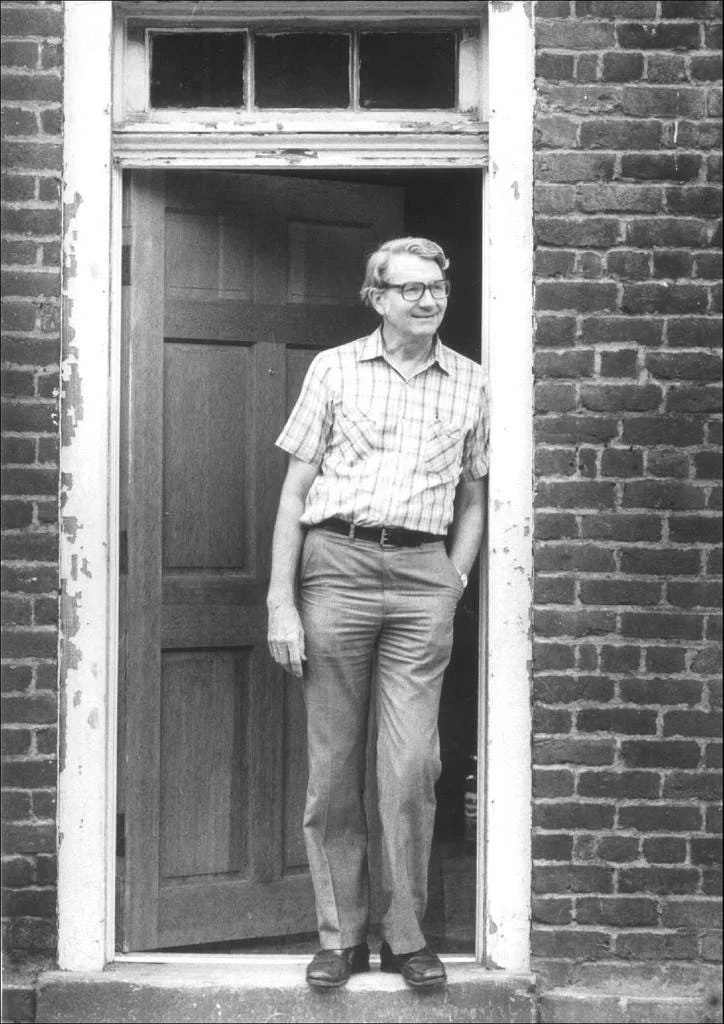
Born January 28th, 1926, Bev Cosby would have been 100 years old today. This brief biography was generously written by Randy Nelson, a lifelong friend of Camp Kum-Ba-Yah.
BEVERLY ROY “BEV” COSBY
Beverly Roy “Bev” Cosby was born in Lynchburg, Virginia on January 28, 1926 and died on January 21, 2002, which was, fittingly, the day on which the Commonwealth honored the memory of Dr. Martin Luther King, Jr.
Bev attended Lynchburg College, served in the United States Navy during World War II, then obtained a Bachelor’s Degree from American University. He worked in his father’s insurance company before earning a Bachelor of Divinity Degree from Union Theological Seminary in New York City, where he was ordained to the ministry at Riverside Church.
In 1950, Bev and his brothers and two close friends founded the “Lynchburg Christian Fellowship” ministry on property acquired from Bev’s father and located in what was then Bedford County, Virginia. That organization changed its name to Lynchburg Covenant Fellowship (LCF) in 1974, to demonstrate greater inclusivity.
Bev was soft-spoken and shy, but had a powerful and lasting impact on Lynchburg. On October 4, 1954, he began the Church of The Covenant, an ecumenical church aligned with the Congregational branch of the United Christian Church, Disciples of Christ. Bev chose that alliance because it authorized inter-racial worship. Bev and his new church members’ viewpoints contrasted with Lynchburg’s highly conservative and segregated traditions and attitudes. Bev advocated for social and racial inclusivity, believing that “everyone has a gift” and that individuals and communities’ benefit by identifying and promoting personal “gifts” and recognizing the “specialness of difference.” Bev later expressed "the need for bridging the gap between religion and life, between church and business, between the secular and the sacred," and few would doubt that Bev Cosby bridged that gap. Bev and his church were publicly criticized for his quiet campaign for racial justice, but his opponents were practically defenseless, for he was neither an outsider, a rabble-rouser, nor an extremist; he was, after all, one of them.
A foremost mission of LCF was to establish an outdoor summer day camp for children. Now known as Camp Kum-Ba-Yah Nature Center, that camp and Bev’s church became highly controversial in July 1961, when Lynchburg’s city leaders sought to prevent racial integration of public facilities by closing all city swimming pools. In response, Bev promptly opened the Camp’s pools to Afro-Americans.
In March, 1962, Dr. Martin Luther King, Jr. visited Bev’s “Lodge of The Fishermen” coffeehouse, in recognition and appreciation of Bev’s ministries. The Lodge of The Fishermen was one of only two dining facilities in Lynchburg where persons of different races could dine together.
LCF was instrumental in establishing low-income housing by purchasing and renovating: the house at 412 Madison Street, the old Moose Lodge at 700 Federal Street, the old Lynchburg High School on Park Avenue, the Frank Roane School, the Joseph Nichols Tavern, and constructing the Shalom Apartments.
Bev’s quiet, un-assuming and casual air, coupled with his hands-on approach, established programs that positively impacted a multitude of people throughout Lynchburg and beyond. Today, few programs exist for Lynchburg's poor, homeless, disabled, or disadvantaged that were not initiated by Bev Cosby, who by remaining in the background and allowing others to take credit for his initiatives, multiplied his effectiveness. He promoted the establishment of vital Lynchburg entities, such as Lynchburg Restoration and Housing Program, Miriam's House, the Haven, Elizabeth’s Early Learning Center, The Wood Ministry, The Gateway, Interfaith Outreach (Kum-Ba-Yah Association), The Lodge of the Fishermen, New Land Jobs, an AID’s hospice home, and ARC of The Blue Ridge.
Bev’s avoidance of personal attention or public praise even led him to decline an invitation to attend a Lynchburg City Council session wherein he was awarded the “Mayor’s Award of Excellence” for his outstanding service to that city. Now, there is also a Bev Cosby memorial fund to continue his work.
After his death, a joint resolution of the Commonwealth of Virginia’s House of Delegates and Senate concurring, expressed the esteem in which Bev was held by the members of the General Assembly and the people of Lynchburg.
John Randolph “Randy” Nelson
Lynchburg, Virginia
Historic Pools at Camp Kum-Ba-Yah Nature Center
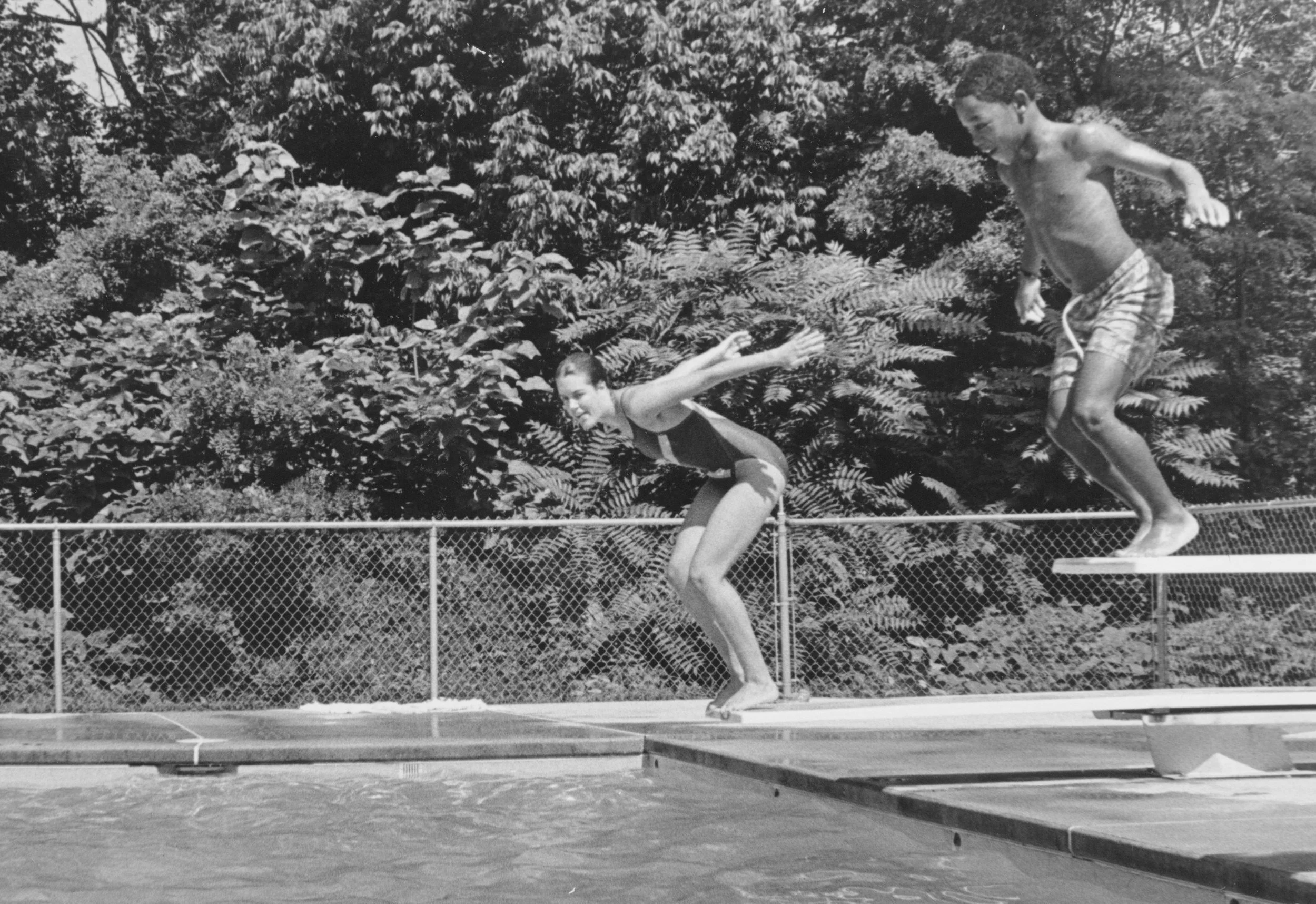
Camp Kum-Ba-Yah’s historic pools opened in 1961 and remain a beloved fixture of the camp experience each year.
More Than a Pool: The Historic Waters of Camp Kum-Ba-Yah Nature Center 🌲
For generations of campers, the swimming pools at Camp Kum-Ba-Yah Nature Center have meant laughter, relief from the summer heat, and some of the best memories of camp. Yet these pools are more than a place to swim: they are living witnesses to a defining moment in Lynchburg’s Civil Rights history and to Camp Kum-Ba-Yah’s enduring commitment to inclusion.
The first pools opened in 1961 to support the growing summer day camp program established by Lynchburg Christian Fellowship under the leadership of Rev. Beverly Roy “Bev” Cosby. From the very beginning, the camp was founded on a radical and simple belief for its time: all children deserved a place to play, explore nature, and feel a sense of belonging .
That belief was tested in that summer.
At the time, Lynchburg, like much of the South, was deeply segregated. When African American families sought access to public swimming pools, city leaders chose to close all municipal pools rather than integrate them. In response, Bev Cosby made a courageous and controversial decision: he opened Camp Kum-Ba-Yah’s pools to the entire community, welcoming Black and white children to swim together at a moment when such an act was considered unthinkable by many .
The consequences were immediate. Some white families withdrew their children from camp. Angry phone calls followed. Campers, both Black and white, were jeered and criticized simply for sharing the water together. Yet the pools remained open. During that summer, Camp Kum-Ba-Yah became the site of Lynchburg’s first racially integrated public swimming, offering a safe and joyful refuge at a time when public spaces across the city were closing their doors .
This moment was not an isolated act of defiance, but part of a broader legacy of justice rooted in the camp’s founding values. Just months later, in 1962, Dr. Martin Luther King, Jr. would visit the Camp Kum-Ba-Yah grounds, meeting with local leaders at the Lodge of the Fishermen, one of the only places in Lynchburg where people of different races could gather together safely. The pools, like the Lodge and the camp itself, stood as quiet but powerful symbols of what community could look like when fear gave way to courage.
Today, campers splash, swim, and cool off in those same pools. Every visit carries forward a legacy of bravery, welcome, and moral clarity. These waters remind us that Camp Kum-Ba-Yah Nature Center has always been about more than recreation. It has been about creating spaces where children are free to be children and where the values of dignity, justice, and community are lived out in real and tangible ways.
As we approach our 75th year of summer camp in 2026, we honor the history held in these pools and recommit ourselves to the vision that shaped them: a camp, a community, and a future where all children are welcome.
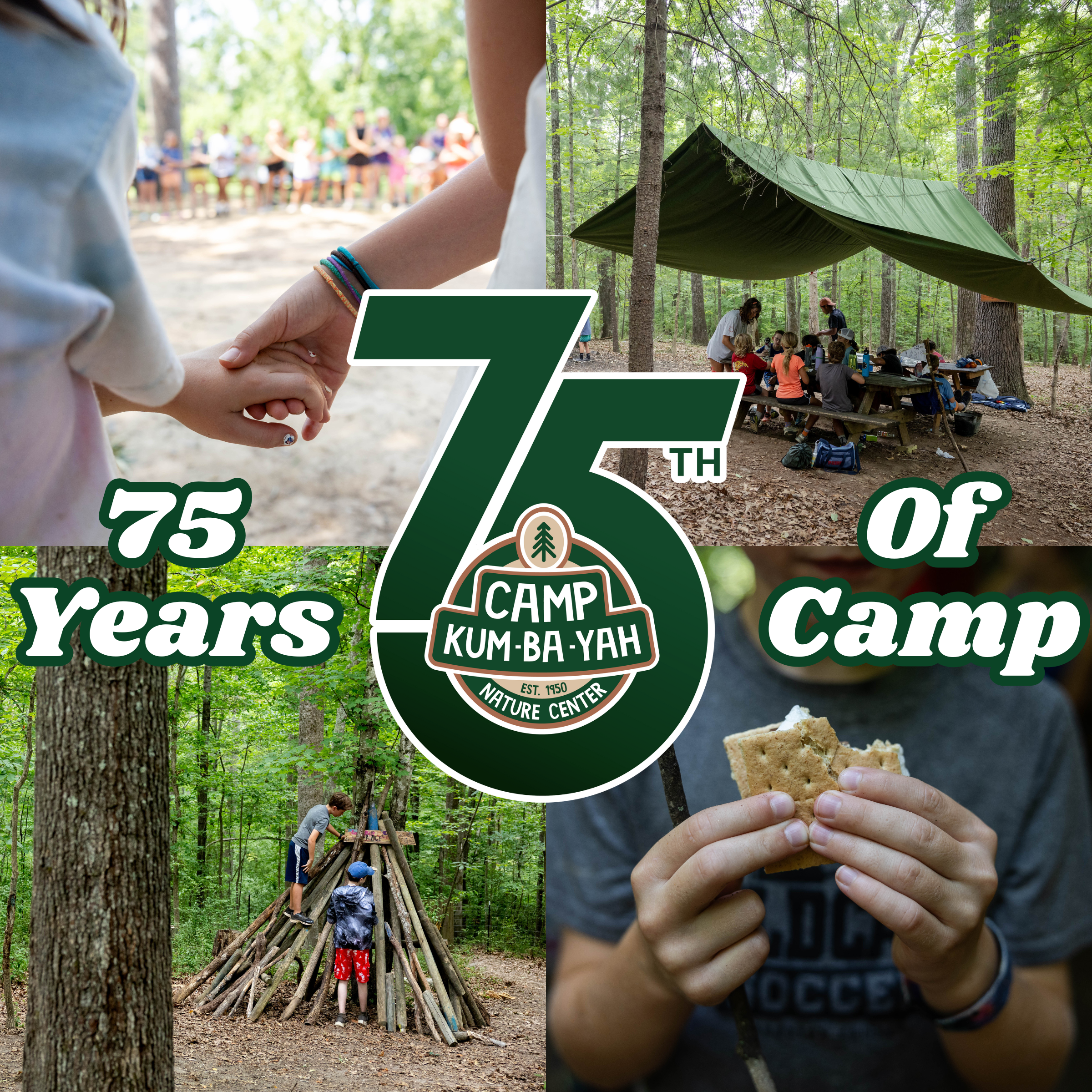
75 Years of Camp!
2026 marks the 75th year of summer programming at CKBY. As we welcome new friends and old this summer, we celebrate the shared traditions and legacy that stretch across the years and gather the next generation of campers to this special place.
Celebrating 75 Years of Summer Camp at Camp Kum-Ba-Yah Nature Center 🌲
In 2026, Camp Kum-Ba-Yah Nature Center will celebrate a remarkable milestone: our 75th year of summer camp. Because there was no camp season in 2020 due to the COVID-19 pandemic, the summer of 2026 represents the 75th summer of camp since our beginnings: an enduring tradition rooted in community, inclusion, and a deep love for children and the outdoors.
Our story began in 1950, when the late Rev. Beverly Roy “Bev” Cosby and his family helped found Lynchburg Christian Fellowship, guided by a simple but powerful question: “Where will our children play?” That question led to the creation of an outdoor day camp on family land: an idea that would grow into something far bigger than anyone could have imagined.
As the organization evolved, so did its name, reflecting a widening circle of welcome. Lynchburg Christian Fellowship later became Lynchburg Covenant Fellowship, signaling a commitment to greater inclusivity. Over time, the camp itself became widely known as Camp Kum-Ba-Yah, a place where children from all walks of life could gather to play, learn, and belong. In recent years, as year-round environmental education and community programming expanded, the organization became Camp Kum-Ba-Yah Nature Center, honoring both its camp roots and its broader mission today.
Throughout these changes, one thing has remained constant: a belief that every child deserves access to nature, joyful experiences, and a community where they are valued. From its early role in social justice and integrated recreation to its present-day programs serving families, schools, and campers across our region, Camp Kum-Ba-Yah has always been about more than summer fun; it has been about shaping lives and strengthening our community .
As we look ahead to this historic 75th year of camp, we do so with gratitude for all who have made this journey possible and with excitement for what lies ahead. We are proud to carry forward this lasting tradition: serving children from every corner of our community and helping them discover joy, confidence, and connection in the natural world.